
How Much Does Stamped Concrete Cost for a Patio or Driveway?

You have been scrolling through photos of gorgeous outdoor spaces, textured stone patterns, rich earthy tones, and borders that look like they belong on a European estate. Then you get the quote and the number stops you cold. It is not that stamped concrete is unaffordable. It is that most homeowners go into the conversation with no frame of reference, no idea what drives pricing up or down, and no way to tell whether they are getting a fair deal or leaving money on the table.
That gap between expectation and information is exactly what this post closes. If you are a Pittsburgh homeowner weighing an upgrade to your patio or driveway, the decisions you make before you ever sign a contract will shape everything from how it holds up through winter to how much you pay over the lifetime of the slab. Our Patios page gives you a closer look at the design possibilities, but read this first so you go into every conversation fully informed.

What Actually Drives Stamped Concrete Cost in Pittsburgh
The honest answer is that stamped concrete pricing varies more than most homeowners expect, and the variation is driven by real factors, not contractor guesswork. Square footage matters, but it is only one piece of the equation. The pattern you choose, the number of colors involved, the site conditions underneath the slab, and the complexity of the border design all push the final number in different directions.
Pattern complexity is one of the biggest variables. A straightforward running-bond brick pattern in a single color costs less than a custom ashlar slate design with a contrasting border and a seamless texture blend. The more intricate the stamp work, the more time your crew spends on it, and labor is a significant portion of what you are paying for with decorative concrete.
Site preparation is another factor that catches homeowners off guard. If the ground needs to be graded, old concrete needs to be removed, or the subbase needs significant work before the pour, those costs are real and necessary. Cutting corners on prep is how you end up with a beautiful surface that heaves, cracks, or settles within a few years. The right contractor builds all of that into the scope of work upfront.
The Mistake Homeowners Make When Comparing Quotes
The most common mistake is comparing total price without comparing scope. One quote might include full demolition of an existing slab, a regraded subbase, two colors with a decorative border, and a sealer application scheduled six weeks after the pour. Another might include none of that. When you look only at the bottom line, the cheaper quote looks better. In reality, you may be buying a fraction of the project.
The second mistake is treating stamped concrete like a commodity purchase where the lowest price signals the best value. Decorative concrete is a skilled trade. The quality of the imprint, the color consistency, the timing of the stamp relative to the concrete's set, and the finishing details are all craftsmanship decisions that cannot be undone after the fact. A poorly stamped slab looks rough and uneven, and it will remind you of that every time you walk out your back door.
What the Installation Process Looks Like from Start to Finish
Understanding the process helps you evaluate what you are paying for. Stamped concrete is not poured and stamped in an afternoon. It involves coordination, timing, and conditions that a good contractor manages carefully at every stage.
Site Prep and the Pour
Before a single yard of concrete arrives, the crew grades and compacts the subbase, sets forms to define the shape and thickness of the slab, and sometimes installs reinforcement depending on the application. A driveway carries more load than a patio, so the thickness and reinforcement requirements differ. Once the concrete is poured and spread to an even depth, your contractor has a limited window to apply the color hardener, release agent, and stamps before the surface sets. That window is not forgiving, and experienced crews know how to work it efficiently without rushing the detail work.
Sealing and Long-Term Care
After the slab cures, it needs to be sealed. Sealing protects the color, enhances the texture, and adds a layer of defense against the things that wear concrete down fastest in Western Pennsylvania. Road salt and deicers cause surface scaling on concrete over time, so using the right mix design and keeping up with a resealing schedule matters far more in this climate than it would in a milder region. Homeowners in McMurray and Finleyville deal with the same freeze-thaw cycles that Pittsburgh residents face, and those repeated cycles are what separate a well-installed slab from one that starts showing damage within a few winters. A properly sealed stamped surface holds its color and texture significantly longer than an unsealed one.
Why Pittsburgh's Climate Makes These Details Non-Negotiable
Western PA winters are genuinely hard on concrete. The region goes through dozens of freeze-thaw cycles every season, and water that gets into small surface voids, expands when it freezes, and contracts when it thaws will eventually break down even a well-made slab if the installation was not engineered for it. Air-entrained concrete mixes and properly spaced control joints are not optional upgrades here. They are what keep your investment looking good years from now rather than becoming a cracking, spalling surface you are replacing in a decade.
This is why hiring a concrete contractor who actually works in this region and understands its conditions is worth your attention. A contractor who builds patios in a mild climate can pour beautiful slabs without ever worrying about a hard freeze. What your project in Allegheny or Washington County demands is a crew that builds cold-climate durability into every pour by default, not as an afterthought. You can see examples of that craftsmanship across project types including Pool Decks, Sidewalks, and Retaining Walls, where the same attention to climate-ready installation applies.
Thinking About Stamped Concrete Cost Over Time, Not Just at the Point of Sale
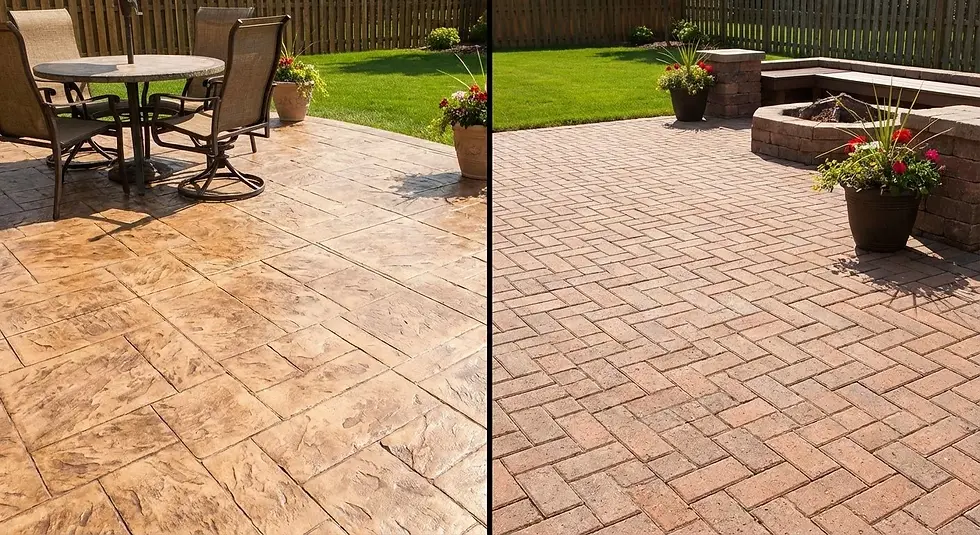
When you look at stamped concrete versus pavers, asphalt, or plain brushed concrete, the cost comparison looks different depending on which timeline you use. Upfront, stamped concrete requires a real investment. Over ten or fifteen years, a properly installed and sealed stamped surface often costs less to maintain than pavers that shift and settle or asphalt that softens, ruts, and needs periodic resurfacing.
For a closer look at how stamped concrete patterns affect both appearance and overall project value, our post on Popular Stamped Concrete Patterns and Design Ideas is worth reviewing before your first contractor conversation. If you are also planning a Driveways project, our guide on How to Choose the Best Concrete Driveway Design for Your Home walks through the design decisions that affect both appearance and stamped concrete cost over the life of the slab. The price you pay at installation should always be weighed against the years of performance and curb appeal you get in return.
FAQ
How much does stamped concrete cost per square foot?
Stamped concrete pricing varies based on pattern complexity, color options, site conditions, and regional labor rates. Because so many factors affect the final number, the most reliable way to get an accurate stamped concrete cost estimate for your project is to request a quote from a local contractor who can assess your specific site and scope.
Is stamped concrete worth the extra cost over plain concrete?
For most homeowners, yes. Stamped concrete delivers the look of stone, brick, or slate at a price point below natural materials, and it offers the same structural durability as standard concrete. The visual return on a stamped patio or driveway is substantial, and it adds genuine curb appeal that plain brushed concrete simply cannot match.
How long does stamped concrete take to install?
Most residential stamped concrete projects take one to three days for the pour and stamping, followed by a curing period before the sealer is applied. Total project timelines vary based on size, site prep requirements, and weather. Your contractor should walk you through a realistic schedule before work begins.
Does stamped concrete hold up in Pittsburgh winters?
Yes, when it is installed correctly. The key is using an air-entrained concrete mix and placing control joints properly to handle the freeze-thaw cycles common in Western PA. Sealing the surface regularly also protects against surface scaling caused by road salt and deicers, which are a real concern in this region. Our post on How Long Does Stamped Concrete Last in Cold Climates? goes deeper on this topic if you want more detail.
How often does stamped concrete need to be resealed?
Most stamped concrete surfaces benefit from resealing every two to three years, though high-traffic areas or surfaces exposed to harsh winter conditions may need attention more frequently. Keeping up with a sealing schedule is one of the simplest things you can do to protect the color and texture of your investment long-term.
What should I look for when hiring a stamped concrete contractor in Pittsburgh?
Look for a contractor with documented experience in cold-climate concrete installation, a portfolio of local projects, and a process that includes proper subbase preparation, air-entrained mix design, and a post-cure sealing schedule. References from Pittsburgh-area homeowners carry more weight than general reviews because they reflect performance under the same freeze-thaw conditions your project will face. Our post on How to Find Quality Concrete Contractors Near You outlines what to ask before signing anything.
Can stamped concrete be used for driveways as well as patios?
Yes. Stamped concrete works well for both applications, though driveway installations require greater slab thickness and reinforcement to handle vehicle loads. The design options, including pattern, color, and border treatments, are equally available for both. If you are comparing your options, our post on Concrete Driveway vs Other Materials: Pros and Cons breaks down how stamped concrete stacks up against alternatives for driveway use specifically.
How do I get a quote from BRK Custom Concrete for a stamped project?
Getting started is straightforward. You can reach BRK Custom Concrete by phone at 412-419-8123 or submit a request through the contact form on the website. A member of the team will follow up to discuss your project, assess your site, and provide an accurate quote based on your specific scope and design goals.
BRK Custom Concrete Builds Stamped Projects Pittsburgh Homeowners Are Proud Of
If you are ready to move from browsing photos to having a real conversation about your project, BRK Custom Concrete is the team to call. With years of experience serving Pittsburgh-area homeowners across Allegheny and Washington Counties, our crew understands what it takes to build stamped concrete that looks exceptional on day one and performs through years of Western PA winters. Whether you are planning a new driveway, an outdoor entertaining space, or something more custom, we bring the same attention to prep, mix design, and craftsmanship to every pour.
Every project we build is backed by local knowledge that generic contractors cannot offer. We know how the soil behaves in this region, how the freeze-thaw cycle punishes shortcuts, and what it takes to deliver a finished surface worth showing off. If you have been thinking about Concrete Countertops or other decorative concrete work to complement your outdoor project, we can help with that conversation too.
Visit BRK Custom Concrete or call 412-419-8123 today. We help Pittsburgh-area homeowners get beautiful, durable stamped concrete results that hold up through every season. Contact us for more information.


Comments