
What Are the Best Stamped Concrete Patterns for Driveways and Patios?

You have been scrolling through inspiration photos for weeks, picturing a driveway that looks like natural stone or a patio that feels like an upscale outdoor room. Plain gray concrete is not what you have in mind, but you are not sure which stamped pattern holds up to real life, which ones are overused in the neighborhood, and which ones will still look sharp ten years from now.
The choices can feel overwhelming once you start comparing textures, layouts, and color combinations. This post breaks down the most popular and proven stamped concrete patterns, explains which ones work best for driveways versus patios, and gives you honest guidance shaped by what actually performs well in our region. If you are already thinking about a Patio for your backyard, keep reading because the pattern decision is one of the first choices you will face, and making it well saves you from regret later.

The Patterns That Consistently Deliver the Best Results
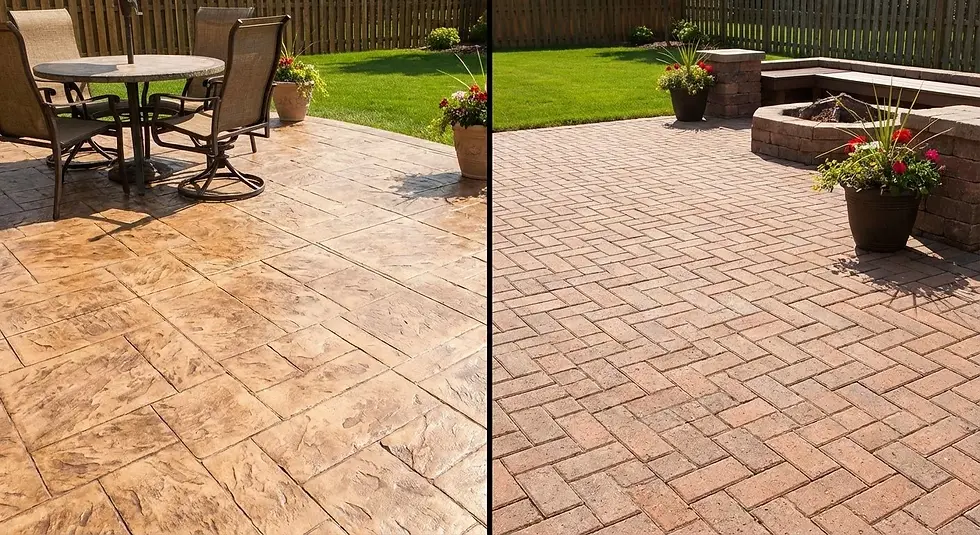
Ashlar slate is the single most requested stamped concrete pattern, and for good reason. It replicates the look of cut stone in a staggered layout, giving outdoor surfaces a clean, upscale appearance that blends with nearly any home style from craftsman bungalows to newer construction. The variation in stone shapes keeps it from looking repetitive across larger areas like driveways and pool surrounds.
Random stone or cobblestone patterns are the next tier down in popularity, and they offer something ashlar does not: a rougher, old-world texture that adds slip resistance. That texture makes cobblestone a smart choice for driveways where cars track in moisture and for walkways where people move in wet weather. Herringbone brick is a strong option for homeowners who want a more formal, symmetrical look. It pairs especially well with traditional architecture and creates a strong visual frame when used on a front-entry walkway or a defined patio space. Wood plank patterns have grown steadily in demand for backyard patios, giving the warmth of weathered wood without the rot, splintering, or annual maintenance that actual wood demands.
If you want to explore how these stamped concrete patterns translate across different project types, the Popular Stamped Concrete Patterns and Design Ideas post is a strong companion resource with visual examples and layout ideas.
When the Pattern Choice Depends on the Surface, Not Just the Look
Driveways and patios put different demands on a stamped surface, and that distinction matters before you commit to a design. Your driveway needs a pattern with enough texture to provide traction under vehicle weight and wet conditions. Deep, pronounced stamp impressions like cobblestone or slate hold up better underfoot and under tire than shallower, more delicate designs that can feel slick when wet or polished sealer is applied.
Patios, by contrast, allow for more creative freedom because foot traffic is lighter and the surface is not carrying the weight and turning friction of vehicles. This is where finer details shine, including fan patterns, seamless stone textures, or custom borders that frame the outdoor living space. A border in a contrasting color running along the perimeter elevates the entire design without adding significant cost, and it gives the installation a finished, intentional look that plain concrete simply cannot achieve.
For homeowners who want to see how stamped concrete patterns look on specific surface types before committing, exploring the Driveways and Patios service pages gives a clear picture of what is possible in both applications.
How Pittsburgh's Climate Shapes What Works Underfoot
Western Pennsylvania's freeze-thaw cycle is one of the most important variables in any outdoor concrete decision, and it directly affects which stamped patterns perform well over time. Pittsburgh typically sees dozens of freeze-thaw cycles each winter, meaning water that seeps into micro-cracks expands and contracts repeatedly. Patterns with deeper relief and properly applied penetrating sealers tend to hold their detail longer because water has fewer places to collect and freeze at the surface level.
The clay-heavy soil common throughout Allegheny County and surrounding communities adds another layer of complexity. Subgrade that is not properly compacted before the pour will settle unevenly over time, which causes cracking that damages the stamped pattern regardless of how beautiful it looked on day one. Professional contractors also set structural footings for features like retaining walls and Pool Decks below the area's 36-inch frost line so that ground movement in winter cannot heave the slab. These are not details that show up in a weekend DIY video, but they are exactly what separates a stamped surface that ages gracefully from one that shows problems within a few years. Homeowners in McMurray and Finleyville deal with the same soil and weather reality, so local expertise matters everywhere in the region, not just within Pittsburgh city limits.
For a deeper look at how cold climate conditions affect stamped surfaces over time, How Long Does Stamped Concrete Last in Cold Climates? is worth reading before you finalize your pattern and sealer choices.
What Stamped Concrete Actually Costs and When to Plan Your Project
Stamped concrete costs more than plain concrete, and the final number depends on the complexity of the pattern, the number of colors involved, the square footage of the surface, and site preparation requirements specific to your property. Intricate stamped concrete patterns with multiple color tints and custom borders require more labor and materials than a single-color ashlar layout. There is no single figure that applies to every job, which is why getting a site-specific quote is the only reliable way to know what your project will cost. The Stamped Concrete Cost Guide: What to Expect for Your Project breaks down the pricing variables in detail and helps you walk into contractor conversations with realistic expectations.
Timing also shapes your experience. Spring and early summer are the most popular windows for concrete work in Pittsburgh, and contractors book up faster than most homeowners expect. If you want a new concrete driveway or patio finished before summer entertaining season, starting conversations with a contractor in late winter gives you the best shot at your preferred schedule. Fall installations are also possible and often excellent, since cooler temperatures slow the curing process in a way that actually strengthens the finished slab.
Questions to Ask Before You Choose a Pattern or a Contractor
Before you finalize a design, ask your contractor to show you photos of completed jobs using the specific pattern and color combination you are considering. A good contractor should have a portfolio that reflects real local work, not just manufacturer samples. You should also ask about the sealer they recommend, how often it should be reapplied, and what maintenance the finished surface will need to keep it looking its best through Pittsburgh winters.
Ask whether the subgrade preparation is included in the scope of work and what it involves. If a contractor glosses over that question, treat it as a warning sign. Proper base prep is not optional in this region. Understanding the full installation process before signing a contract is worthwhile, and the Complete Guide to Concrete Driveway Installation Process walks through each phase so you know what to expect from start to finish.
For homeowners still weighing whether stamped concrete is the right call over other surface materials, Concrete Driveway vs Other Materials: Pros and Cons lays out the comparison in straightforward terms. If you are also planning a Retaining Wall or other hardscape feature alongside your driveway or patio project, it is worth asking your contractor how the stamped concrete patterns you choose can carry through consistently across all the surfaces for a cohesive finished look.
FAQ
What is the most popular stamped concrete pattern for patios?
Ashlar slate is consistently the most requested pattern for patios because it mimics the look of cut natural stone while remaining highly versatile across different home styles. It works equally well in a contemporary outdoor room or a traditional garden setting, and the varied stone shapes keep the surface visually interesting across larger square footage.
Does stamped concrete crack more than regular concrete?
Stamped concrete is not more prone to cracking than standard concrete when it is installed correctly, with proper subgrade compaction, control joints placed at appropriate intervals, and a quality sealer applied and maintained. Cracking is almost always the result of poor preparation or improper installation rather than the stamping process itself.
How long does stamped concrete last?
A properly installed and sealed stamped concrete surface can last 25 years or more. The key factors are the quality of the original installation, the sealant used, and how consistently the homeowner reseals the surface every few years to protect the color and texture from UV fading and moisture infiltration.
Do I need to reseal my stamped concrete driveway every year?
Most stamped concrete surfaces benefit from resealing every two to three years, though high-traffic driveways or surfaces exposed to heavy sun may need attention more frequently. A quality penetrating sealer or topcoat applied by a professional extends the life of the color and protects the stamped texture through Pittsburgh's harsh winters.
Is stamped concrete slippery when wet?
Some stamped patterns and certain sealers can become slippery when wet, particularly when a high-gloss topcoat is used on a smoother texture. Choosing a pattern with deeper relief like cobblestone, adding a non-slip additive to the sealer, or selecting a matte finish sealer reduces that risk significantly on driveways and pool decks.
Which stamped concrete patterns work best for pool decks?
Patterns with deeper texture and a matte or low-gloss sealer work best around pools because they provide grip when feet are wet. Ashlar slate, random stone, and flagstone patterns are popular choices for pool decks because they deliver the natural stone aesthetic while the pronounced texture reduces slip risk. A non-slip additive in the sealer is also a standard recommendation for any pool surround project.
Can BRK Custom Concrete help me choose the right pattern for my property?
Absolutely. BRK Custom Concrete works with homeowners across Pittsburgh, McMurray, Finleyville, and the broader Western PA region to select stamped concrete patterns and color combinations that complement the home's architecture and meet the demands of the specific surface. A site visit and conversation about your goals is the best starting point for making a confident decision.
Ready to Build a Driveway or Patio That Turns Heads in Pittsburgh
With over a decade of experience serving homeowners across Pittsburgh and Western Pennsylvania, BRK Custom Concrete brings the kind of local knowledge that generic online guides cannot replace. Our team understands the soil, the climate, and the installation details that determine whether a stamped surface stays beautiful for decades or starts showing problems in year three. Homeowners throughout Allegheny County and Washington County consistently trust us to transform plain concrete slabs into outdoor spaces that genuinely add to the appeal and value of their properties, and that track record is reflected in the reviews and referrals we receive from past clients.
Whether you are planning a stamped driveway, a backyard patio, or want to explore options for a Sidewalk or other hardscape feature, BRK Custom Concrete is the team Western PA homeowners trust to get the work done right. We also invite you to explore more ideas on our blog and browse completed projects in our gallery before you reach out.
Visit BRK Custom Concrete or call 412-419-8123 today. Our team helps Pittsburgh homeowners move from inspiration to a finished outdoor space they are proud of for years to come. Contact us for more information.



Comments