
How Long Does Stamped Concrete Last in Cold Weather Climates?

You invested in a stamped concrete patio two summers ago, and it looked stunning. Then winter arrived with its freeze-thaw cycles, road salt tracking in from the driveway, and weeks of alternating ice and thaw, and now you are staring at surface flaking and hairline cracks wondering if you made a mistake. That scenario plays out for homeowners across Western PA every spring, and it raises a legitimate question before anyone commits to a new project.
The honest answer involves more than just picking a number. How well stamped concrete holds up in cold climates depends heavily on mix design, installation timing, sealer maintenance, and the quality of the contractor behind the pour. If you are planning a new concrete patio or decorative flatwork in Pittsburgh, PA, this post will walk you through everything you need to know before breaking ground.

Freeze-Thaw Resistance: Lifespan Expectations for Stamped Concrete
The good news is that stamped concrete is not inherently fragile in cold-weather climates. When it is mixed, poured, and sealed correctly, a stamped concrete surface can hold up for 25 years or longer even in regions that see hard freezes, heavy snowfall, and regular deicing. The critical word in that sentence is "correctly," because the margin for error narrows considerably once you factor in freeze-thaw stress.
Concrete expands and contracts as temperatures rise and fall. In a climate like Western Pennsylvania's, that cycle can repeat dozens of times across a single winter season. A properly designed mix uses a lower water-to-cement ratio, air-entrained concrete, and adequate thickness to absorb that movement without cracking. Decorative stamps add texture and depth but do not compromise structural integrity when the base pour meets those standards. The lifespan difference between a well-built stamped surface and a poorly built one is not a matter of a few years. It is the difference between a surface that looks better each decade and one that starts failing before the second winter ends.
Why Some Stamped Concrete Fails Early and How to Read the Warning Signs
Early failure in stamped concrete almost always traces back to a few avoidable decisions. Using too much water to make the mix easier to work with weakens the finished slab. Pouring late in the season when overnight temperatures drop before the concrete cures fully is another common culprit. Skipping or delaying the sealing schedule leaves the surface vulnerable to moisture intrusion, which then freezes and forces the top layer apart, a process known as scaling.
Hairline cracks that appear in the first year are usually cosmetic and can be addressed with a quality sealer. Widespread scaling or spalling that reveals aggregate underneath is more serious and typically signals a problem at the mix or curing stage. If you see those issues on an older surface, it is worth having a professional evaluate whether resurfacing can save it or whether a full replacement will deliver better long-term value. Either way, understanding what caused the failure informs every decision that comes next.
Cold Climate Concrete Longevity: What Pittsburgh, PA Homeowners Need to Know
Pittsburgh and the surrounding communities in Washington County and Allegheny County face a specific combination of stressors that homeowners in milder regions do not deal with. Road salt and chemical deicers are used heavily throughout the region, and they accelerate surface scaling on concrete that has not been sealed and maintained on a consistent schedule. That reality means sealing is not optional maintenance here. It is a structural protection decision that should happen every two to three years depending on traffic and exposure.
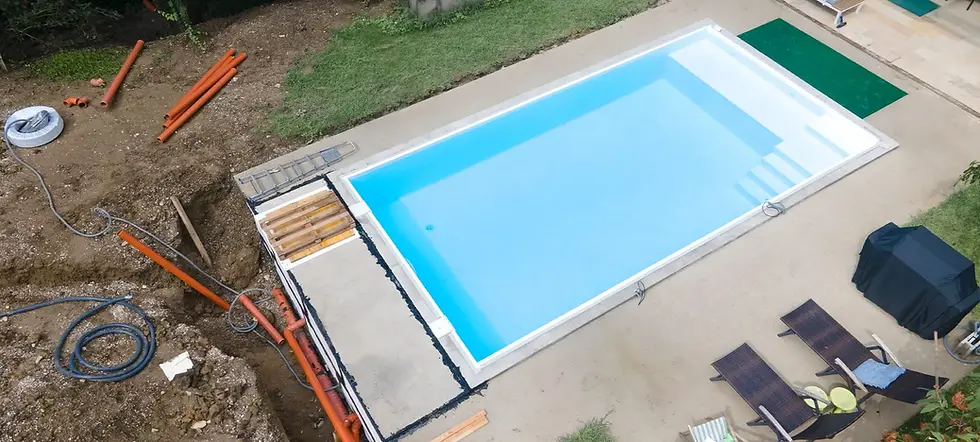
The region's frost line matters for any project that includes raised or structural elements alongside your stamped surface. At BRK Custom Concrete, footings for pool decks and retaining walls are set below the Pittsburgh area's 36-inch frost line so that freeze-thaw cycles cannot gradually lift or shift the structure over time. That same engineering discipline carries over to every flatwork project because the soil beneath the slab must be properly prepared before a single yard of concrete is poured. Skimping on the base or the footing depth to save time is precisely what turns a five-figure investment into an expensive replacement job five years later.
The Real Cost Conversation: What Affects Price and When to Plan
Stamped concrete costs more than plain gray flatwork, and that premium reflects both the material and the skill involved in executing patterns cleanly. Pricing varies based on square footage, pattern complexity, color choices, site preparation requirements, and the condition of the existing base. There is no single answer that applies to every project, which is why we encourage every homeowner to connect with our team directly for an accurate project estimate rather than relying on regional averages that may not reflect your specific situation.
Timing also affects the outcome. In Western PA, the ideal installation window runs from late spring through early fall when overnight temperatures stay consistently above 50 degrees Fahrenheit. Pours scheduled too close to the first hard frost risk curing problems that compromise long-term durability no matter how good the mix design is. If you are considering a new concrete driveway or decorative surface for next season, planning conversations in late winter or early spring give you the best shot at securing your preferred installation window before the schedule fills. The same applies to sidewalks and other decorative flatwork, where cold-climate installation timing is just as important as it is for larger poured surfaces.
What to Ask Before You Hire a Concrete Contractor for Stamped Work
Not every concrete contractor has the same experience with decorative work, and the questions you ask before signing a contract will tell you a great deal about what you are getting. Ask whether they use air-entrained concrete mixes rated for freeze-thaw exposure, because the answer should be yes without hesitation. Ask what thickness they pour for residential flatwork and what base preparation they perform before the pour. Standard residential flatwork is typically four inches thick over a compacted gravel base, and anything less should prompt follow-up questions.
Ask about their sealing recommendation and whether they apply a sealer as part of the project or leave that step to you. A contractor who builds a strong sealing schedule into the project from the start is one who thinks about your surface lasting decades rather than just surviving the first inspection. You can also review finished projects by visiting our gallery to see the level of detail and craftsmanship that goes into every BRK Custom Concrete job before you ever pick up the phone. For more context on specific patterns and design choices that work well in cold climates, our post on popular stamped concrete patterns and design ideas is worth reviewing before you finalize your project plans.
FAQ
How long does stamped concrete last in cold weather climates?
Stamped concrete installed with the right mix design, proper curing, and a consistent sealing schedule can last 25 years or more in cold climates like Western Pennsylvania. Freeze-thaw cycles and road salt are the two biggest threats, and both can be managed effectively with air-entrained concrete and sealer applied every two to three years.
Does stamped concrete crack in cold weather?
All concrete can crack under sufficient stress, but a quality stamped concrete installation with proper base preparation and control joints manages that movement so cracks remain minor and manageable. Widespread cracking or surface scaling usually points to a mix problem, a curing issue, or skipped maintenance rather than a flaw in stamped concrete as a category.
How often should I seal stamped concrete in Pittsburgh, PA?
In the Pittsburgh area, sealing every two to three years is the standard recommendation for residential stamped surfaces. High-traffic areas like driveways may benefit from more frequent applications. Resealing on schedule is the single most cost-effective step a homeowner can take to protect the surface against deicing chemicals and moisture penetration.
Can I use salt or ice melt on a stamped concrete driveway?
Chemical deicers and rock salt are hard on any concrete surface, but they are especially damaging to stamped and colored concrete. The safer approach is sand for traction and a calcium magnesium acetate product if you need a deicing agent. Keeping up with your sealing schedule also reduces how much moisture penetrates the surface when melt products are used.
Is stamped concrete worth the investment over plain concrete in a cold climate?
Stamped concrete is worth the investment when it is installed correctly and maintained consistently. The decorative value adds real curb appeal and home value, and the durability matches plain concrete when the mix and installation standards are the same. The key is hiring a contractor experienced with cold-climate flatwork rather than choosing stamped work purely on aesthetics without asking the right questions.
What is the best time of year to pour stamped concrete in Western Pennsylvania?
The ideal installation window in Western PA runs from late spring through early fall, when overnight temperatures stay reliably above 50 degrees Fahrenheit. Concrete poured too close to the first hard frost may not cure fully, which directly undermines long-term cold climate concrete durability regardless of how well the mix was designed. Scheduling your project early in the season gives the slab maximum time to cure and harden before winter stress begins.
How do I get a quote from BRK Custom Concrete for a stamped concrete project?
Reach out to BRK Custom Concrete by phone or through the contact form on the website to schedule a consultation. The team serves homeowners across Pittsburgh, McMurray, Finleyville, Washington County, and Allegheny County and will assess your site, discuss design options, and provide an accurate project estimate based on your specific needs and conditions.
Ready to Build a Stamped Concrete Surface That Lasts Through Western PA Winters?
With years of experience serving Pittsburgh, PA homeowners and the surrounding Western Pennsylvania communities, BRK Custom Concrete understands what it takes to build decorative concrete surfaces that hold up through real winters, not just mild ones. Every project starts with the right mix design, proper site preparation, and a sealing plan built to protect your investment for decades. Whether you are planning a stamped patio, a pool surround, or a decorative driveway, our team brings that same standard of craftsmanship to every pour.
If you are ready to stop wondering how long a surface will last and start planning one built to endure, now is the time to get the conversation started. Spring installation windows book quickly across Allegheny County and Washington County, and the homeowners who plan ahead are the ones who get their preferred start dates and design choices locked in before the season gets away from them.
Visit BRK Custom Concrete or call 412-419-8123 today. Our team builds stamped concrete surfaces designed to handle Pittsburgh winters and look exceptional for decades to come. Contact us for more information.



Comments