
Do You Need a Permit to Pour a Concrete Patio?

You've finally decided to do something with that bare backyard. Maybe you're picturing a stamped concrete patio off the back door, a spot where the family can gather on summer evenings without stepping through mud or patchy grass. You've got a contractor in mind, a rough size in your head, and a budget you're comfortable with. Then someone at the hardware store mentions permits, and suddenly you're not sure whether to call the township first or just let the contractor handle it. That moment of uncertainty stops more projects than bad weather ever does.
Questions about concrete patio permits come up constantly, and the honest answer is: it depends on where you live and what you're building. Whether you're adding a simple patio off the back door or planning something more ambitious like a pool deck or retaining wall, permit requirements in Pennsylvania vary significantly by municipality, project size, and intended use. This post will walk you through what you need to know so you can move forward with confidence instead of guesswork.

What Pittsburgh, PA Homeowners Should Know Before Breaking Ground
Pennsylvania does not have a single statewide rule that determines whether you need a permit for a concrete patio. Instead, that decision is made at the local level, by your township, borough, or municipality. In Allegheny County and Washington County, where many BRK Custom Concrete projects take place, the rules can differ from one township to the next, sometimes dramatically. A homeowner in McMurray might face different requirements than someone just a few miles away in another municipality.
In most cases, a small ground-level patio that does not require excavation, drainage alterations, or structural footings can be built without a permit. But size thresholds matter. Many Pennsylvania municipalities require permits when a paved or covered area exceeds a certain square footage, often somewhere around 200 square feet, though that number varies. If your patio connects to an existing deck or structure, alters drainage on your property, or sits within a required setback distance from your property line, a permit is far more likely to be required. Getting this wrong is not just a paperwork problem. Unpermitted outdoor concrete work can create complications when you sell your home.
What Triggers a Permit Requirement for Concrete Patio Projects
Most homeowners are surprised to learn that the material matters less than the scope. A large concrete patio with drainage implications is far more likely to require a permit than a modest slab poured flat against an existing home. Local zoning ordinances typically focus on impervious surface coverage, which refers to the total amount of hard surface on your lot that prevents water from absorbing into the ground. Once a property hits a certain percentage of impervious coverage, additional hardscape projects can trigger review, even if the individual project seems small.
Setbacks are another common trigger. Your municipality likely has minimum distances your patio must maintain from property lines, easements, or structures. In some Pittsburgh-area communities, this can be as little as five feet, while others require ten feet or more. If your design pushes those boundaries, you will need to pull a permit before any concrete construction begins. The same applies to grading changes. A patio built on a slope that redirects water toward a neighboring property or storm drain will almost certainly draw regulatory attention.
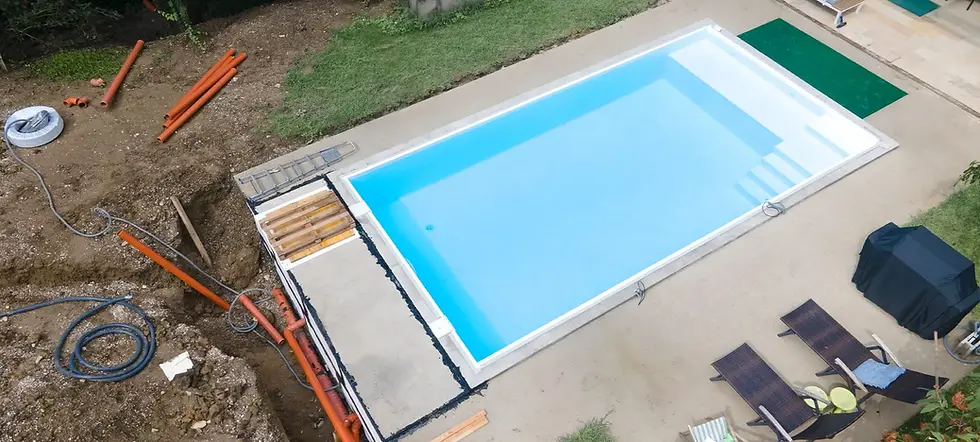
In some situations, the permit requirement comes not from the patio itself but from connected features. A concrete patio that wraps around a pool deck is treated differently than a standalone backyard slab, because pool-related structures carry their own safety and building code requirements. Similarly, if your project includes a retaining wall, as many sloped Pittsburgh-area properties require, that wall may trigger its own review process.
How to Find Out What Your Municipality Actually Requires
The most reliable path forward is a direct call or visit to your township's building and zoning office. Bring your property address, a rough sketch of the project dimensions, and the location relative to your property lines. Many Allegheny County and Washington County municipalities have staff who can answer basic permit questions over the phone in a matter of minutes. This is far better than guessing, or worse, proceeding without one and discovering the problem later.
A reputable concrete contractor can also be an invaluable resource at this stage. Professionals who have been working in the Pittsburgh area for years have navigated local permit processes many times. They know which municipalities are strict, which have streamlined approval processes, and which require specific documentation like site plans or drainage calculations. This is one of the reasons working with a locally rooted contractor matters more than homeowners often realize.
What Happens If You Skip the Permit Process
If you pour a concrete patio without a required permit and the work is later discovered, the consequences can range from annoying to expensive. Your municipality may issue a stop-work order if the project is still underway, or require you to prove the work meets code after the fact. In some cases, inspectors have required sections of concrete to be removed to verify what lies underneath, particularly for slabs built over areas where utilities or drainage might be affected. Beyond the immediate hassle, unpermitted improvements can complicate real estate transactions. Buyers' attorneys routinely ask about permits, and lenders sometimes flag unpermitted work during the appraisal process.
How Western PA's Climate Shapes Concrete Construction
Even when permits are not required, the concrete work itself must be done right. Western Pennsylvania's freeze-thaw cycle is aggressive. Road salt and deicers used throughout Pittsburgh winters cause surface scaling on concrete that has not been mixed and sealed properly, which is why the right concrete mix and a consistent sealing schedule matter far more here than they would in a milder climate. For structural projects, footings for pool decks and retaining walls are set below the Pittsburgh area's 36-inch frost line, ensuring the freeze-thaw cycle cannot lift or shift the structure over time. Good concrete construction in this region accounts for what happens in January, not just what looks good in July.
What Permits Cost and How Long the Process Takes
Permit fees in Pennsylvania are set locally, and they vary widely. Some smaller townships charge minimal administrative fees for simple residential projects. Others calculate fees based on project valuation, which means a larger or more complex concrete patio could carry a higher fee. Because these amounts differ so significantly from one municipality to the next, it would not be accurate to quote a specific range here. The honest advice is to contact your local building office and ask directly. The cost is almost always modest relative to the total project investment.
Timing is the other variable homeowners often underestimate. Simple permits in some municipalities are issued over the counter within a few days. Others require plan review cycles that take several weeks. If you are planning a patio project for a specific season or event, factoring in permit lead time at the beginning of the planning process is far smarter than assuming you can pour as soon as the contractor is available.
Why the Right Contractor Makes the Whole Process Easier
A knowledgeable concrete contractor does not just handle the physical work. Experienced professionals who regularly build concrete patios in the Pittsburgh area understand local permit requirements, know how to prepare the necessary documentation, and can often pull permits on your behalf as part of the project scope. That kind of familiarity with local process is something that comes from years of working in specific communities, not from reading a general guide online. It is also one of the clearest ways a trusted contractor protects your investment long-term.
BRK Custom Concrete has spent years serving homeowners across Pittsburgh, McMurray, Finleyville, and the surrounding Western PA communities. Our team has guided hundreds of families through exactly this kind of decision, helping them understand what their specific municipality requires before a shovel ever hits the ground. That local experience is not something you find with a contractor who works out of a neighboring region or relies on generic project checklists.
Before the project begins is also the right time to think through the full scope of your outdoor living goals. If a stamped concrete finish, a connected sidewalk, or future additions like a fire pit area are part of the vision, discussing that upfront allows your contractor to design and permit the project correctly the first time. Revisiting plans mid-project, or adding outdoor concrete work after the fact, creates exactly the permit complications you want to avoid. Our post on What Building Permits Are Required for New Driveways? is also worth reading if your project scope includes a connected driveway or apron.
FAQ
Do I need a permit for a concrete patio in Pennsylvania?
Whether you need a permit depends entirely on your local municipality, not a statewide rule. In most Pennsylvania townships, small ground-level patios below a certain square footage threshold may not require one, but larger slabs, projects near property lines, or outdoor concrete work that affects drainage often do. Contacting your local building office before you start is always the safest first step.
What happens if I pour a concrete patio without a permit and one was required?
Your municipality could issue a stop-work order, require you to demonstrate code compliance after the fact, or in some cases require portions of the concrete construction to be removed for inspection. Unpermitted improvements can also create complications during a home sale, as buyers and lenders sometimes ask specifically about permitted work on a property.
How long does it take to get a permit for a patio in the Pittsburgh area?
Timelines vary by municipality. Some townships in Allegheny County and Washington County process simple residential permits within a few business days, while others have review cycles that run several weeks. Building your permit timeline into the beginning of the planning process prevents delays later in the season when you are ready to pour.
Does it matter if my patio connects to a pool deck or retaining wall?
Yes, significantly. A concrete patio that connects to a pool deck or includes a retaining wall is typically treated differently from a standalone slab because each of those elements carries its own code requirements. Pool-related structures involve safety codes, and retaining walls above a certain height almost always require permits. Planning the full scope upfront allows your contractor to address all requirements together.
Is stamped concrete treated differently than plain concrete for permit purposes?
From a permit standpoint, the finish does not change the regulatory picture. Municipalities focus on dimensions, impervious surface coverage, setbacks, and structural elements, not on whether the surface is broom-finished or stamped. A stamped concrete patio of the same size and location as a plain one would face the same permit review criteria.
Can BRK Custom Concrete handle the permit process for my project?
BRK Custom Concrete has extensive experience building concrete patios, driveways, and outdoor structures across Pittsburgh, McMurray, Finleyville, and the surrounding Western PA communities. Our team is familiar with local permit processes in Allegheny County and Washington County and can help guide you through what your project requires before a single form is filed.
Does the size of my concrete patio affect whether a permit is required?
Size is one of the most common triggers for permit requirements. Many Pennsylvania municipalities set a square footage threshold, often around 200 square feet, above which a hardscape project requires review. The exact number varies by township, so checking with your local building office based on your planned dimensions is the most reliable way to know where your project stands.
Ready to Build the Outdoor Space You've Been Planning?
With years of experience serving Pittsburgh, PA homeowners and surrounding communities, BRK Custom Concrete has helped hundreds of families turn bare backyards into beautiful, lasting outdoor spaces. We understand the permit landscape across Western PA, and we bring that knowledge to every project from the first conversation. Skipping that step early on is where most project headaches begin, and working with a team that knows local requirements from the start protects your investment from the moment we break ground.
If you are ready to stop researching and start building, our team is ready to walk you through the process, answer your permit questions, and give you an accurate picture of what your project will take. Whether you are planning a simple concrete patio for Finleyville backyard gatherings or a full outdoor living area with a stamped finish and connecting walkways, BRK Custom Concrete delivers the craftsmanship and local expertise your project deserves.
Visit BRK Custom Concrete or call 412-419-8123 today. Work with a trusted Pittsburgh-area concrete contractor who handles the details so your project gets done right the first time. Contact us for more information.



Comments