
Why Choose Concrete Instead of Asphalt Driveways?

AI Overview
Concrete driveways typically last longer than asphalt driveways, often lasting 25 to 40 years or more.
Concrete requires less frequent maintenance, while asphalt often needs resealing every few years.
Concrete offers more design options, including decorative finishes and custom textures.
Professional installation helps ensure a concrete driveway remains durable, stable, and visually appealing for decades.
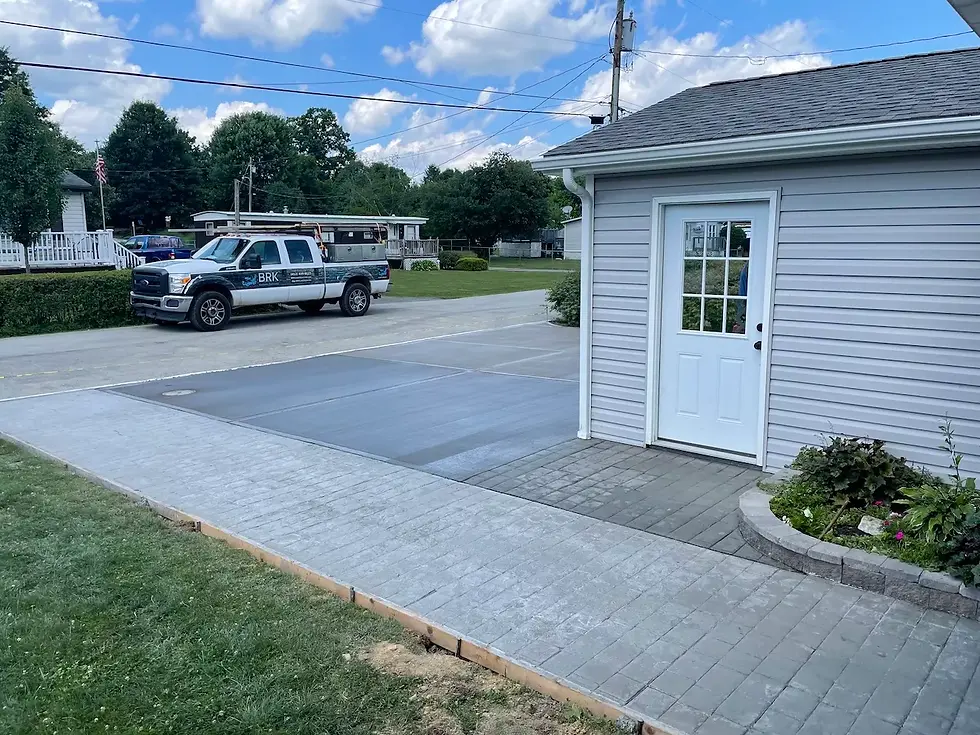
A concrete driveway is an essential feature for most homes, providing access for vehicles while contributing to the overall appearance of the property. While homeowners often focus on materials and finishes, the width of the driveway is another important design factor.
A driveway that is too narrow may make parking difficult, while one that is properly sized can improve both convenience and functionality. The ideal width depends on how the driveway will be used, how many vehicles need to be accommodated, and the available space on the property.
Understanding recommended driveway widths can help homeowners plan a layout that works well for their daily needs.
Standard Width for Single Car Driveways
For homes with a single vehicle driveway, the typical width is 10 to 12 feet.
This width provides enough space for most passenger vehicles to enter and exit the driveway comfortably. It also allows drivers to open doors safely without stepping off the concrete surface.
Although 10 feet may be considered the minimum width, many homeowners prefer 12 feet for additional comfort when maneuvering their vehicle.
Single-car driveways are often used when space is limited or when the driveway primarily serves one vehicle.
Recommended Width for Two-Car Driveways
Two-car driveways are generally wider to allow two vehicles to park side by side or pass each other comfortably.
The standard width for a two-car concrete driveway is typically 18 to 24 feet.
An 18-foot width can accommodate two vehicles in many situations, but 20 to 24 feet often provides a more comfortable layout for parking and maneuvering.
Wider driveways can also help reduce the risk of vehicles driving on lawn edges or landscaping areas.
Factors That Influence Driveway Width
While standard dimensions provide a helpful guideline, several factors can influence the ideal driveway width for a specific property.
Number of Vehicles
Households with multiple vehicles may benefit from wider driveways or additional parking areas.
Vehicle Size
Larger vehicles such as trucks or SUVs require more space than compact cars.
Garage Layout
The width of the garage entrance often influences the width of the driveway. A driveway should align with the garage opening to allow easy access.
Property Space
Some homes have limited space between structures, landscaping, or property boundaries. In these cases, driveway width may need to be adjusted accordingly.
Future Needs
Homeowners may also consider future needs such as additional vehicles or recreational vehicles when planning driveway dimensions.
Problem to Solution: Avoiding Narrow Driveway Designs
The Problem
A driveway that is too narrow can create several inconveniences. Drivers may struggle to enter or exit the driveway comfortably, especially if the driveway connects directly to a garage.
Narrow driveways can also make it difficult for passengers to open car doors fully without stepping onto grass or landscaping.
In some cases, vehicles may drive over lawn edges or curbs, which can damage landscaping or create safety concerns.
The Solution
Planning a driveway with sufficient width helps prevent these issues. By selecting dimensions that accommodate vehicles comfortably, homeowners can improve accessibility and overall functionality.
Professional contractors often evaluate the property layout, garage alignment, and parking needs to recommend the most suitable driveway width.
This planning ensures the driveway remains practical while maintaining a clean and balanced appearance on the property.
Additional Driveway Design Considerations
Beyond width, several other design elements can enhance the usability of a residential driveway.
Driveway Aprons
A driveway apron is the section that connects the driveway to the street or roadway. This area may be wider to allow smoother vehicle entry.
Turnaround Areas
Some properties benefit from a turnaround area that allows vehicles to exit the driveway without backing into the street.
Parking Extensions
Homeowners sometimes include additional parking pads or side extensions for guests or additional vehicles.
Walkway Integration
Driveways can also be designed to connect with walkways or pathways that lead to the home entrance.
These features help improve convenience while enhancing the overall layout of the property.
People Also Ask
What is the minimum width for a residential driveway?
The minimum width for a single-car driveway is typically around 10 feet, though many homeowners prefer 12 feet for added comfort.
How wide should a driveway be for two cars?
Two-car driveways are usually between 18 and 24 feet wide to provide adequate parking space.
Can driveways be widened later?
Yes. In many cases, driveways can be expanded or widened depending on the available space and property layout.
Does driveway width affect property value?
A well-designed driveway with sufficient space can improve both convenience and curb appeal.
FAQ Section
How wide should a driveway be in front of a two-car garage?
Driveways leading to a two-car garage are typically at least 18 to 24 feet wide to align with the garage doors.
Should a driveway be wider near the garage?
Some driveways widen near the garage to allow easier parking and vehicle maneuvering.
Do larger vehicles require wider driveways?
Yes. Homes with larger vehicles, such as trucks or SUVs, may benefit from slightly wider driveways.
Can decorative designs be added to wide driveways?
Yes. Decorative finishes such as stamped or colored concrete can be incorporated into driveways of any width.
We Are Ready to Help Design Your Concrete Driveway
Choosing the right driveway width helps ensure the space remains practical, comfortable, and visually balanced. Proper planning can improve vehicle access, enhance curb appeal, and create a driveway that meets the needs of the household.
At BRK Custom Concrete, we design and install durable concrete driveways tailored to the layout and functionality each property requires.
Call us today at (412) 419-8123 to discuss your driveway project with our team, or fill out our form to request a FREE quote and learn more about our professional concrete driveway services.


Comments